Get In Touch
Winnipeg, Manitoba, CA
hello@rivettmultimedia.com
Ph: +1 (647) 718-9038
Work Inquiries
hello@rivettmultimedia.com
Ph: +1 (647) 718-9038
Back

Your Website Has Six Seconds: What Website First Impression Design Actually Does

Your website first impression forms in about six seconds, and most of that decision happens before anyone reads a single word.

Most visitors decide whether to stay or leave a website within seconds of landing on it. Six seconds is not enough time to read anything. It’s barely enough time to scroll. So what exactly are people deciding in that window?

Mostly, it’s whether the page looks like it belongs to a real, capable business. Does it load quickly, or does it sit there with a half-loaded layout? Is the headline immediately clear, or does it take effort to figure out what the business actually does? Does the design feel current, or does it have that unmistakable look of something that hasn’t been touched in years?

At Rivett Multimedia, we think about website first impressions from the very beginning of every web project. Not as an afterthought, not as polish applied at the end, but as the foundational question underneath every design decision.
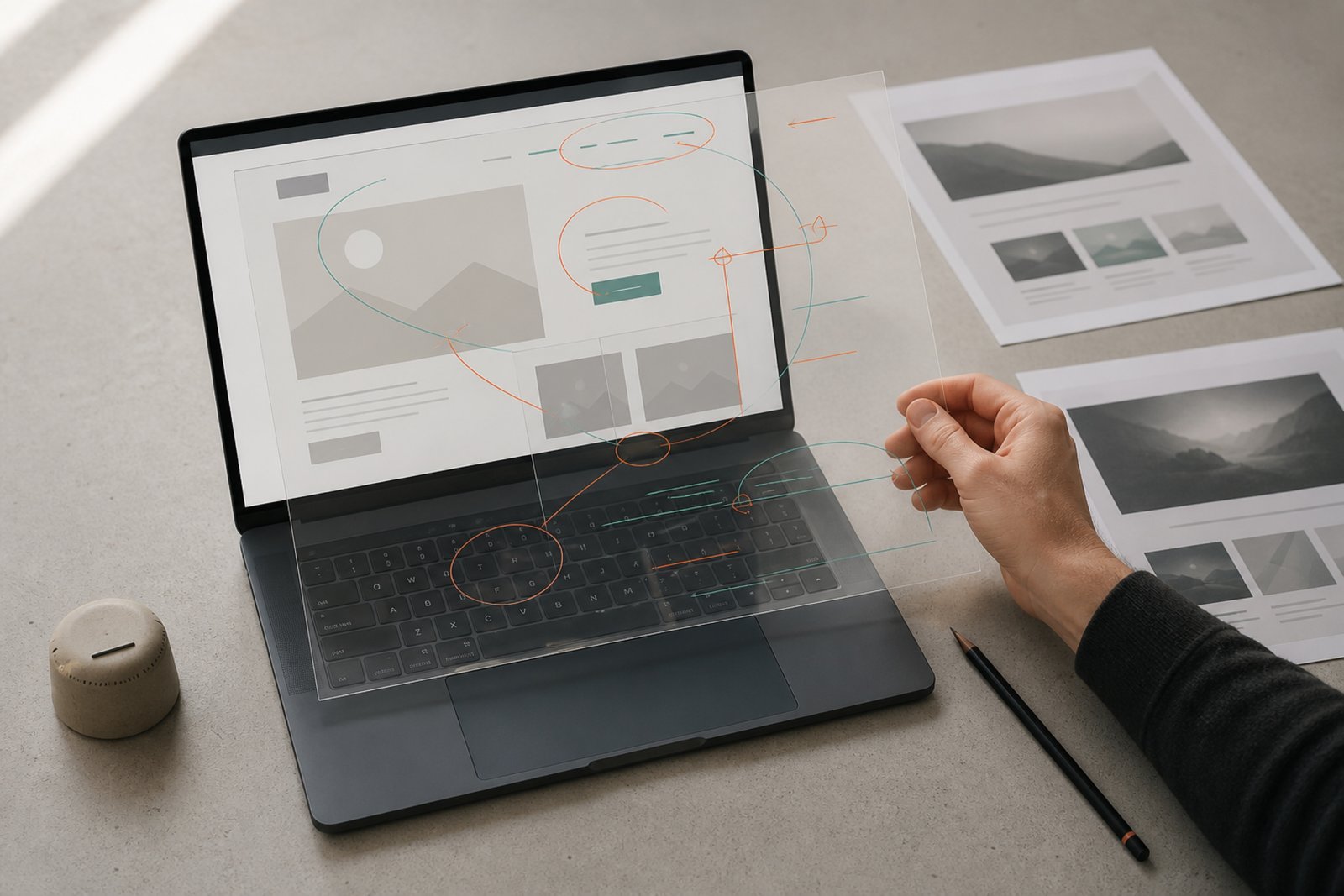
Rivett Multimedia web design first impression audit

What Your Website First Impression Is Actually Telling People

When someone lands on your website for the first time, here is what they are actually processing, usually without realising it.

Speed is the first signal. If your site takes more than a couple of seconds to load, you’ve already lost a chunk of visitors before they’ve seen anything. Research from Google shows that as page load time goes from one second to three seconds, the probability of a visitor bouncing increases by 32 percent. That’s not a small number.

Colour and tone come next. Before reading anything, people register the emotional temperature of a palette. Warm colours read differently than cool ones. High contrast feels different from muted. These associations are cultural, psychological, and immediate.

Typography choices follow. Fonts carry personality whether we intend them to or not. A serif typeface reads differently than a sans serif. The typefaces you choose are part of the website first impression experience, even for people who could not tell you the difference between a font and a typeface.

And then imagery. Stock photos that look like stock photos undermine credibility faster than almost anything else. Imagery that feels specific, real, and relevant to the brand creates a sense of authenticity that people pick up on immediately.

The Difference Between Looking Good and Feeling Right

There is an important distinction in website first impressions between a design that is objectively good and a design that is right for the specific brand. A law firm’s website should probably feel measured and trustworthy. A children’s toy brand should feel playful and approachable. A boutique creative studio should feel considered and a little unexpected.

When any of these feel generic, like they could belong to any business in any industry, that is a missed opportunity. The six second test is not just asking “does this look professional.” It is asking “does this look like the right kind of professional for what this business actually is.”

At Rivett Multimedia, we had a client whose website was clean, modern, and honestly quite nice. But the business itself was warm and personal, the kind of company built on relationships and a hands on approach. The website felt cold by comparison. The website first impression was sending the wrong signal entirely.

We adjusted the colour palette to feel warmer, swapped a sterile typeface for something with more character, and replaced stock photography with imagery that felt specific to the business. The design didn’t get worse. It got more honest. And the six second impression shifted entirely.

You can learn more about how Rivett Multimedia approaches web design on our services page.

What Happens After Six Seconds

If someone stays past those first six seconds, you have earned a little more of their attention. But you haven’t earned their trust yet. That comes from what they find when they actually start reading and navigating.

Is the messaging clear and specific, or is it full of vague language that could describe any business? Does the navigation make it easy to find what they came for, or does it require effort to figure out where things are? Are there real signals of credibility — specific work, real language, honest descriptions of what you do and who you do it for?

The six second impression gets people to stay. What comes after is what gets them to reach out.

How to Test Your Own Website First Impression

If you want to evaluate your own website first impression, step back from your site for a moment. Pretend you’ve never seen it before. Better yet, ask someone who genuinely hasn’t — a friend, a family member, anyone unfamiliar with your business — to look at your website for just a few seconds and tell you their gut reaction.

What is the first feeling they get? If the honest answer is “nothing in particular,” or worse, a feeling that doesn’t match what your business actually is, that is worth paying attention to.

The Nielsen Norman Group, one of the leading UX research organisations, has documented extensively how users form opinions about websites within milliseconds of landing on them. Their research confirms what most designers already know intuitively: the emotional response comes first, and the rational evaluation comes after. If the emotional response is wrong, the rational evaluation might never happen.

Small Changes, Real Impact

The good news is that improving your website first impression doesn’t always require a complete redesign. Sometimes it’s about tightening the palette, being more deliberate with spacing, or making sure your typography actually reflects your personality. Sometimes it’s about replacing imagery that feels generic with something that feels specific.

Small changes, but the kind that shift how people feel in those first six seconds, which is often the only chance you get.

If your website isn’t making the right first impression, get in touch with Rivett Multimedia & Events. We’d be glad to take a look and tell you honestly what we see.